How to Design Your Weekly Schedule
If you’re new around these parts, over the summer we decided not to do summer camp to spend more time with our kids (and literally save thousands of dollars).
And in my retro about the summer, I talk the good, the bad, and the ugly (spoiler: it was largely good).
But there was one long-lasting effect I didn’t notice until recently: I made my schedule pretty open for anyone who wanted to meet.
I didn’t want them to be limited to my limited availability, so I tried to be as open as possible.
But over the last few weeks —really since my episode with Conny, I realized that I’ve let everyone else control my calendar.
The day I recorded with Conny, I was all over the place, stressed, and exhausted because I had meetings basically all day — and it ended with a podcast recording where I had to be “on.”
I decided to take a meeting with almost anyone bc I feel they are the best way to form relationships, but I’m not vetting those people.
I wasn’t creating boundaries for my meetings either. I even have a calendar that’s totally open for friends — but I’ve sent it to more than friends.
If you’re a busy solopreneur — especially a parent or someone with other obligations, like a podcast, how do you make sure you don’t cede your entire schedule to everyone else?
In Streamlined Solopreneur this week, I present a couple of solutions, and a tool to help.
Here’s the gist.
The first thing you should do is ask yourself these 4 questions:
- What times are non-negotiable for meetings? When are times where you absolutely won’t meet? Can you create blocks of time here?
- How many meetings can I realistically handle in a day?
- Which meetings are essential, and which can be handled asynchronously?
- How will I handle exceptions or conflicts?
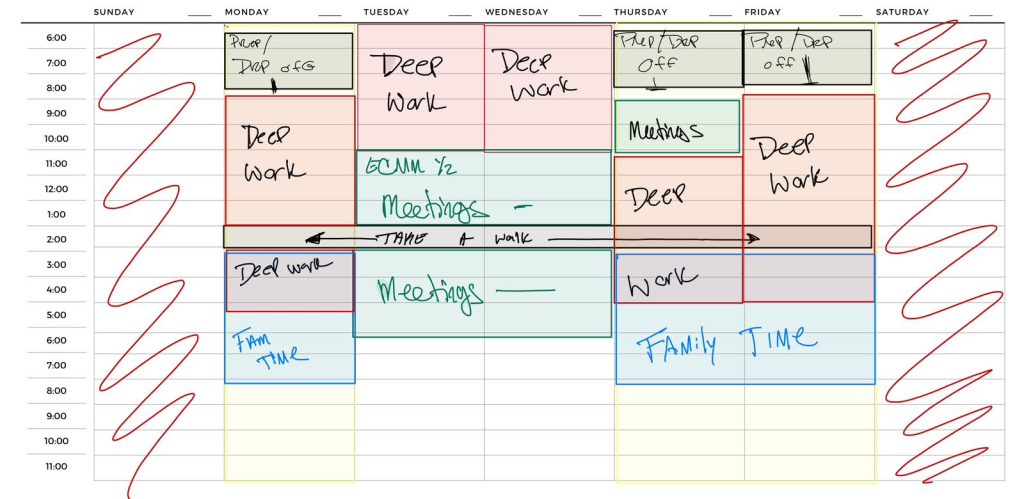
I do my best work in the morning, so most morning are off limits for me — I do have a recurring meeting on Tuesdays, so I built-in some time after that.
I also have at least one 3-hour block each day that’s totally off limits, plus no meetings Mondays or Fridays.
I think I can realistically do 3-4 meetings per day, and I’ve determined that podcast recordings and sales calls for high ticket items are the most essential “must have” meetings. Others will happen, but might be able to happen asynchronously.
Write down these rules, and maybe block off a calendar. Here’s what mine looks like:
Then it’s time to put this into practice. I use Cal.com for my scheduling, and you can create working hours, as well as limit meetings per-calendar.
The only feature Cal.com (and I think most schedulers) is missing is the ability to globally limit the number of meetings per day, so I’ll have to keep an eye on that — but that’s not a huge issue right now, and probably won’t be, given the limit and buffers across the rest of the app.
Doing this will create the space you need in your schedule to get deep, meaningful work done — and it means that you’re not at the mercy of everyone else’s schedule.
Combine this with a few good processes, and you’ll be focusing on your most important work — or be able to show up for loved one better — in no time.
If you want to learn even more about how I’m guarding my time, check out the latest episode of Streamlined Solopreneur.